
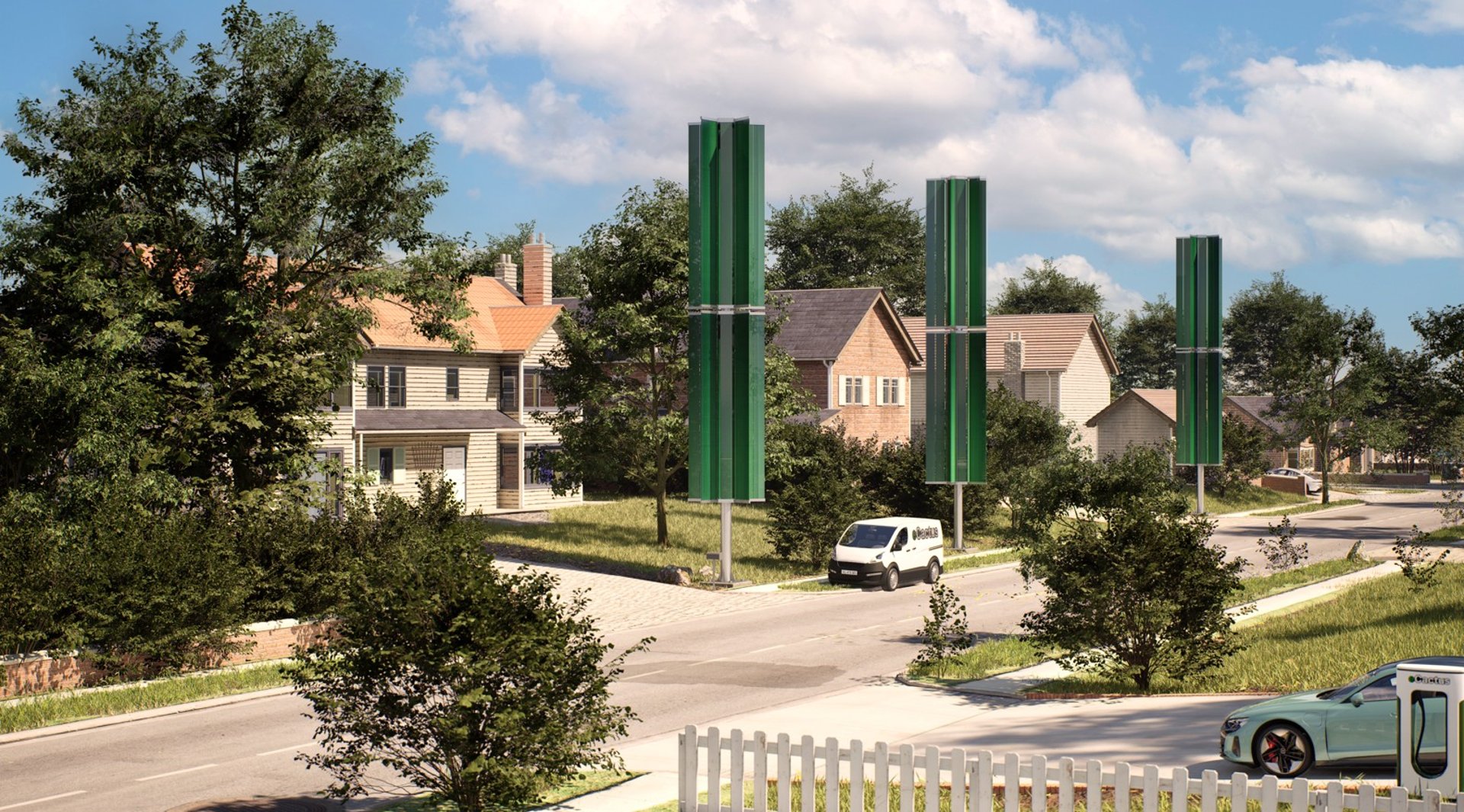
eCactus Solar Towers Integration
Residential, Small and Large Business, Public Infra-structure Applications
Bringing Photo-voltaics into the neighbourhood is one of our main goals. We see roof installations on houses as difficult and costly. Cleaning and damage repair bills can heavily offset any gains from the energy collection. Large buildings with Solar Collection rooftop arrays, is obviously still a good way to utilize the roof space. We think the front garden or back garden or parking lot can also be used to collect energy. The solar towers could be installed almost anywhere. integrating Solar collection as close to the customer is our mission. Reduced costs and ease of install will generate a much faster ROI (Return on Investment) for the end user. Energy prices are definately going to go up. Using eCactus Solar Towers to offset grid prices is a great way to reduce furture operating expenses.
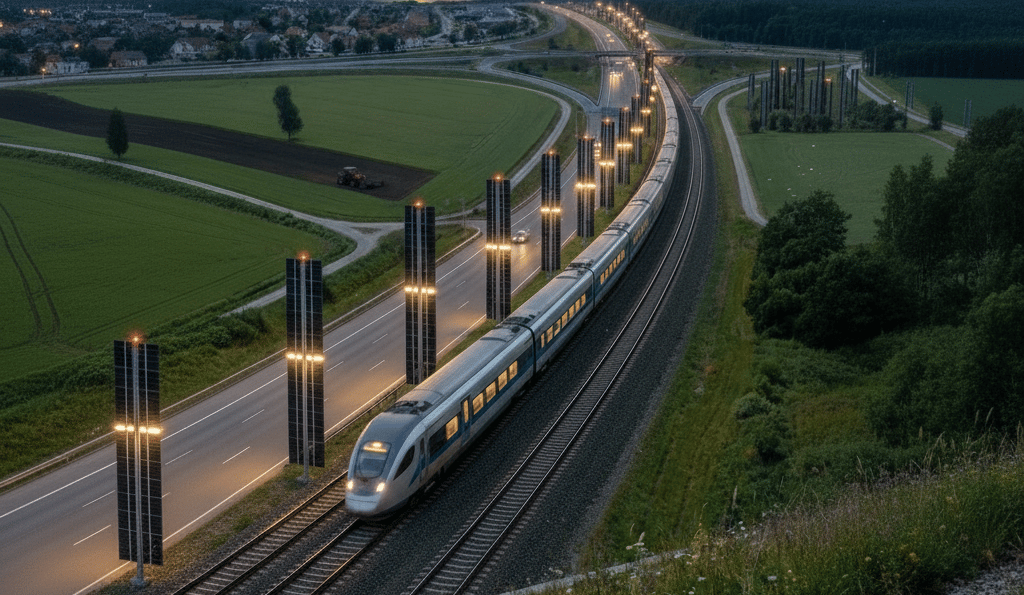
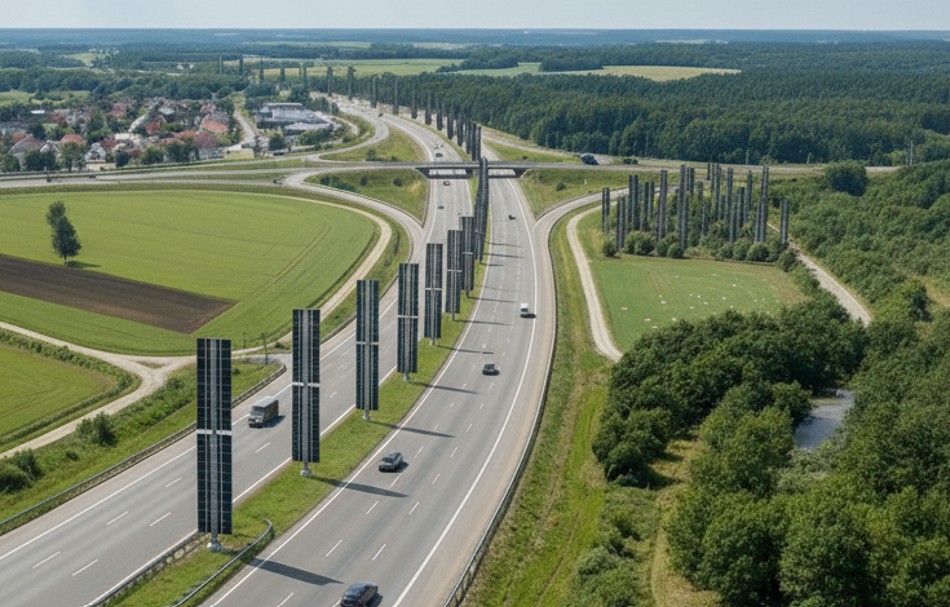
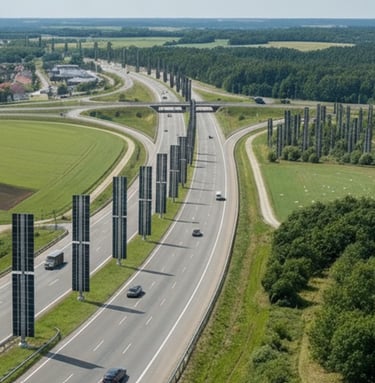
Good reasons for Public Infra-structure Applications
Efficient land use: Road‑integrated PV (RIPV) makes use of already sealed or adjacent land — including pavements, noise barriers, and overhead structures — avoiding the need for new land acquisition.
Significant clean‑energy generation: Highways span enormous areas with strong solar exposure. Covering or bordering them with PV systems can meaningfully boost renewable electricity production.
Lower carbon emissions: Using ecactus Solar Towers would reduce reliance on fossil‑fuel‑based power and help countries meet climate targets.
Support for electric mobility: PV‑powered rest areas and roadside systems can supply distributed energy for EV charging, reducing grid strain and enabling cleaner long‑distance travel.
Innovation and cost reductions: Zero‑carbon highway concepts drive demand for building‑integrated photovoltaics (BIPV), accelerating technological improvements and economies of scale.
Versatile integration options: eCactus Solar Towers can be embedded into pavement, mounted beside roads, or installed as overhead canopies, offering flexibility for different climates and infrastructure types.
Railway infrastructure and Photovoltaics
Direct renewable power for rail operations: PV can feed electricity straight into railway power grids, reducing dependence on conventional energy sources and supporting decarbonization goals.
Large untapped linear space: Rail corridors, station roofs, and adjacent land provide extensive areas for solar deployment without requiring new land acquisition.
Lower energy costs and improved resilience: Railways face high energy consumption; solar integration helps offset costs and enhances energy security.
Technological readiness: Projects like PV4Rail show that innovative inverters and direct feed‑in systems can seamlessly integrate solar power into existing rail grids, strengthening grid stability.
Emerging on‑track applications: New concepts — including the world’s first PV system installed directly on railway tracks — demonstrate growing feasibility and innovation.
Supports national energy‑transition strategies: Studies highlight strong PV potential along rail infrastructure, making it a strategic asset for scaling renewable energy.


eCactus Energy GmbH
Platanenstrasse 42
Rüsselsheim 65428
Germany
contact@ecactusenergy.eu